
Safety
Child to Staff Ratio
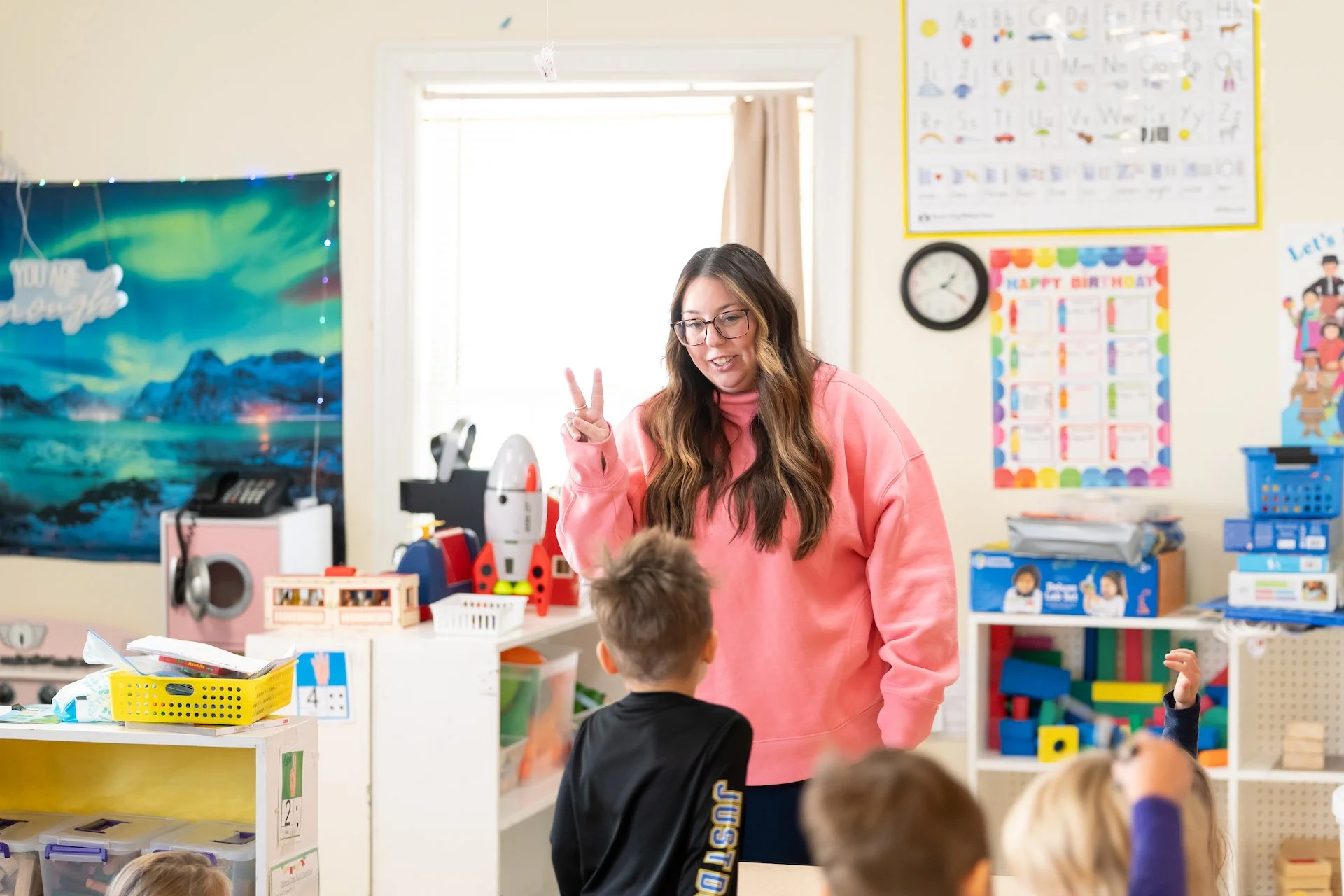
We believe young learners thrive in smaller settings. That’s why we maintain intentionally low teacher-to-student ratios across every age group: 1:5 in our Two-Year-Old classroom, 1:6 in our Three-Year-Old program, 1:6 in our Four-Year-Old program, and 1:8 in Kindergarten. These small class sizes foster strong relationships, close supervision, and individualized learning at every stage of early development.
Admissions/Hiring Policy
The Good Shepherd Day School does not discriminate on the basis of race, color, religion, national or ethnic origin, or physical capabilities in the administration of its admission or hiring policy.
Licensing Information
The Good Shepherd Day School is licensed as a Type I facility by the Commonwealth of Kentucky Cabinet for Health Services as part of title 905 Chapter 2 of the Kentucky Administrative Regulations. Our license number is 354080. We are inspected yearly and reissued this license based upon the findings of that inspection.
Security
The Good Shepherd Day School staff members are trained to watch children at all times.
In addition:
Each staff member is responsible for a designated group of children.
A security code to enter the Day School is only given to employees of the school and church. No one may enter without a staff member opening the door.
Parents must sign their child in when arriving in the morning and sign them out in the afternoon.
No one, other than a parent, is allowed to remove a child from the Day School unless they are listed on the child's release form and on Procare app. Anyone other than the custodial parent picking up a child for the first time will be required to show a valid picture ID. Parents are asked to provide, in writing, if a child is being picked up by someone other that the usual party. In case of custody disputes, the school requires a copy of the custodial or guardianship agreement to be on file. Without this, we must allow the child to be released to either parent.
Fire Safety
Yearly inspections by the state fire marshal's office and monthly fire drills assure that children know how to leave the building and where to go in case of fire. The school is equipped with smoke detectors and a sprinkler system.
First Aid
Plans for dealing with medical emergencies are posted in each classroom. Staff members are trained in pediatric first aid and CPR. In the event of a serious injury requiring immediate medical attention beyond the scope of Day School staff, you will be notified immediately and your child will be transported by ambulance to the closest medical facility or to the facility of your choice.
Up-to-date first aid kits are in each classroom and are transported wherever the class goes. Each child's emergency notification record is kept with the first aid kit as well as in the classroom and in the school office. In case of a minor accident or incident you will receive an accident/incident report in your child's Procare. Please sign and return one copy to the school and keep the other copy for your records.
Weather
Weather Emergencies/Snow Days/Tornado and earthquake drills are conducted on a regular bases. A weather radio is kept in the school office for inclement weather and emergency announcements.
In case of snow, GSDS closes according to Lexington Catholic High School's policy. Please listen to your local radio or TV station. There is another Good Shepherd in Frankfort, so listen for location. If Lexington Catholic operates on a delay, GSDS has a delay plan in place as well.
Children go outside to play unless there is "active precipitation, extreme heat (above 90 degree F) or cold (below 15 degree F) conditions, or public announcements that advise people to remain indoors."
Child Abuse and Neglect
The Day School is required by the laws of the Commonwealth of Kentucky to report any and all suspected cases of child abuse and neglect.
Potty Accident Policy
All children enrolled at GSDS, except those in the 2 year old or designated 3s’ classroom, are expected to be potty trained when they begin school. A 3-year- old wearing pull-ups is not considered potty trained. While occasional potty accidents will happen, children who persistently have potty accidents will be excused from further attendance until they are completely trained.
Behavior Management
A child having difficulty controlling his/her behavior will be:
Redirected to an appropriate activity
Encouraged to use words
Guided by a positive model
Reminded of the rules
Given "renewal time"
Instances of frequent behavior issues will result in one or more parent conferences, with the goal of working to bring about a resolution. Should a child continue to have difficulty maintaining proper behavior, an outside consultant may be called to consult together with the school and the parent.
If, after repeated consultation with an outside consultant, a child's behavior remains problematic, the parents of the child may be asked to withdraw their child from the school. The School reserves the right to dismiss a student from its preschool program should the School, in its discretion, determine that doing so is in the best interest of the School and/or the student.
Biting Policy
The first time a child bites another child: The biter will be removed from the activity and told "No" and then redirected to another activity. The bitten child will be comforted and any wound attended to. A written Incident Report will be filled out and the parents of both children will be notified via Procare. The name of the child that bit will not be released.
The second time the child bites they will be removed to the school office. The bitten child will be comforted and any wound attended to. A written Incident Report will be filled out and the parents will be notified via Procare. The name of the child that bit will not be released.
The third time the child bites they will be sent home immediately. The parents of the biter will be requested to come to school for a strategy planning conference to develop a written plan of action. The child will not be able to return for the rest of the day and until the conference is held. The conference will be scheduled ASAP. The bitten child will be comforted and wound attended to. A written Incident Report will be filled out for the bitten child via Procare. The name of the child that bit will not be released.
Health Requirements
Immunizations and Physicals
A valid, current immunization certificate must be on file in the GSDS office.
If a child has surgery, a medical procedure, or disabling injury (broken bone etc.) a doctor's note releasing the child or explaining limitations will be required.
A certificate of good health and attendance suitability by a doctor will be required at the start of the school year. This can be obtained from your child's physician.
CLICK HERE to view the forms we require to have on file.
Illness
Children who become sick with fever, vomiting, or *diarrhea during school hours will be isolated from other children, and a parent called to remove them from school. Sick children must be free of fever, vomiting, and diarrhea for 24 hours (without medication) before returning to school. Children with a suspected case of conjunctivitis (pink eye), will need to bring a note from a doctor saying it has been treated or has been examined and found to be free of pink eye before returning to school. Children on antibiotics have to complete a 24-hour schedule of the prescribed medication before returning to school. Please contact the school office if your child has an illness requiring them to stay home from school. We keep a log to track contagious illnesses. Sick children may not attend school or any school activity for any reason.
*Children who are not potty trained will be removed from the classroom and parents called to pick them up if they have 2 or more diarrhea or one diarrhea with another symptom (such as a low-grade fever).
*Children who are potty trained will be removed from classroom and parents called to pick them up if they have 1 diarrhea.
Medication
Prescription Medication
When a child requires that they be given prescription medicine during school hours, please use the following procedure:
All medicine must be accompanied by a daily authorization form to give medicine (can be obtained from the teacher or office).
Bring all medicine to your child's teacher to be stored in a locked box, which can be refrigerated (as needed).
Medicine will be dispensed by your child's teacher at the time designated by the daily authorization.
Medicine must be brought to school in its original container.
Benadryl sent to school to be used in case of an allergic reaction must have dosage instructions from the child's doctor.
Non-Prescription Medication
Follows the same regulations and procedures as prescription medications. Except, a medicine form may be filled out weekly instead of daily.
Non-prescription medication includes but not limited to: diaper cream, sunblock, lotions/creams, and chap stick.
Allergies
*If your child has a food allergy, please let us know and send a supply of acceptable food for emergencies.
Please be mindful when preparing snack that there may be a child in your child's class with a food allergy. This is particularly true with children with peanut and tree nut allergies. Some of our classrooms are nut free. Please check with your child's teacher if this is true for their classroom.